
If you ask me what mistake marble buyers make most often, I don’t hesitate: wrong size.
Not wrong marble. Not wrong style. Wrong size.
I’ve seen a 60 cm angel get lost in a 500-square-meter garden. I’ve seen a 3-meter fountain overwhelm a tiny courtyard. And I’ve heard the same words from dozens of clients: “I didn’t realize how different it would look once it arrived.”
The problem is, most sellers show you a sculpture in a showroom or a product photo — against a neutral background, with nothing around it for scale. That piece you’re looking at on your screen right now? It will look completely different standing in your garden, your church, or your foyer.
This guide is about getting the size right — before the marble block is even cut.
1.The Golden Rule: Sculptures Shrink
Here is the single most important thing to understand:
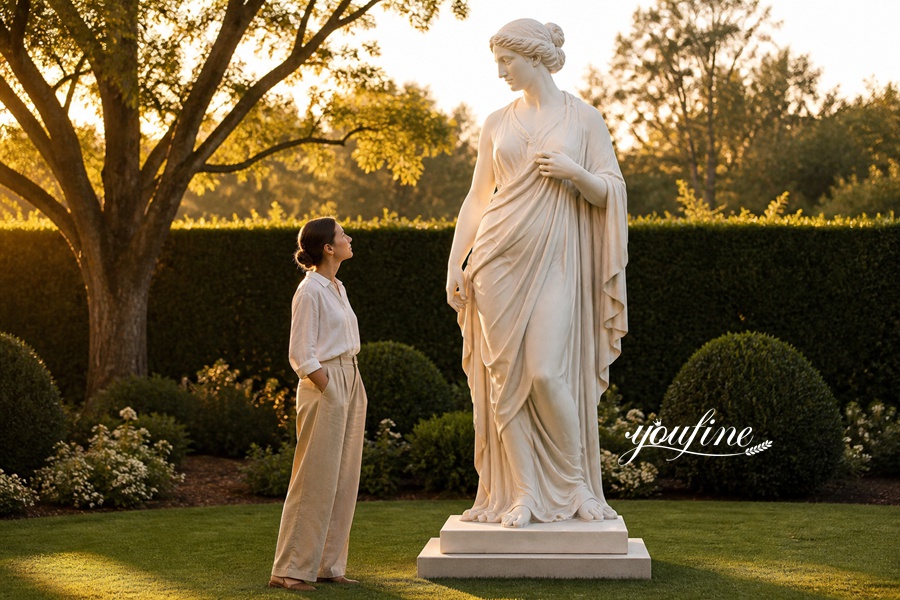
In our experience, a sculpture that looks commanding in a photo often feels significantly smaller once installed in a real space — especially outdoors
Why? Because your brain judges size relative to surroundings. In a photo, there are no surroundings. In your garden, the sculpture competes with trees, walls, sky, and the house itself. These elements are enormous — and they make the sculpture look smaller by comparison.123
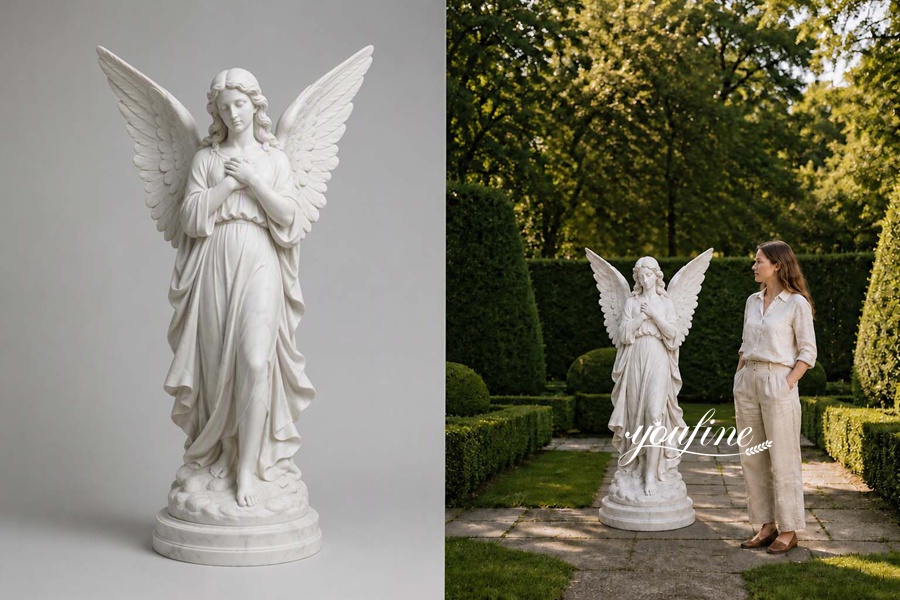
This rule applies to almost every outdoor sculpture. For indoor pieces, the effect is less dramatic but still real — a statue against a tall wall or under a high ceiling shrinks visually.
What This Means in Practice
If you look at a 120 cm statue and think “That’s about right” — go up one size. If you’re deciding between two sizes and the larger one fits your budget, choose the larger one. In our workshop experience, clients are far more likely to wish they had chosen a larger size than to feel that a well-planned sculpture is too impressive.
2.Size Guide by Display Location
Start here. Figure out where the sculpture will live, then use this table as your first filter.
| Location | Typical Viewing Distance | Recommended Sculpture Height | Example |
| Tabletop / Console | 1-2 meters | 20-40 cm (8-16 in) | Small marble bust, cherub figurine, desk ornament |
| Bookshelf / Mantel | 2-3 meters | 40-70 cm (16-28 in) | Portrait bust, small religious statue, single figure |
| Floor Corner (Indoor) | 2-4 meters | 90-150 cm (36-60 in) | Life-size angel, single standing figure, pedestal bust |
| Garden / Courtyard | 3-6 meters | 100-150 cm (40-60 in) | Garden angel, single classical figure, small animal statue |
| Medium Garden | 6-15 meters | 150-200 cm (60-80 in) | Greek god statue, pair of lions, religious figure |
| Large Estate Garden | 15-30 meters | 200-300 cm (80-120 in) | Multi-figure group, monumental standing figure, equestrian statue |
| Grand Entrance / Driveway | 20-50 meters | 250 cm+ (100 in+) | Oversized lion pair, monumental equestrian statue, grand guardian figure |
| Church Sanctuary | 5-20 meters | 150-250 cm (60-100 in) | Virgin Mary, Jesus statue, saint figures, altar pieces |
3.Size Guide by Sculpture Type
Not all marble sculptures follow the same sizing logic. A portrait bust on a mantel, a life-size garden figure, and a monumental estate centerpiece each have their own rules. Here is how to think about each typ.
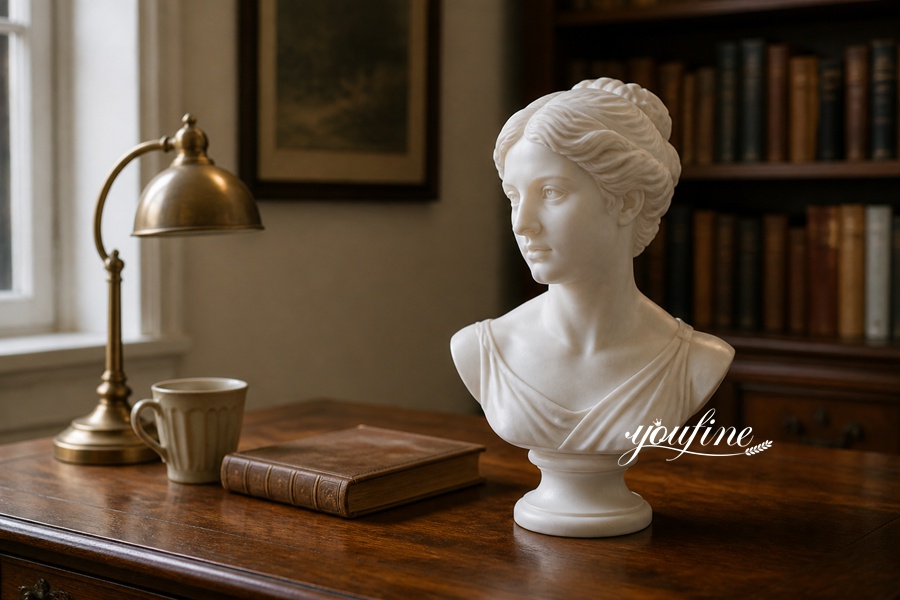
Portrait Busts
Busts are viewed up close, so the focus is on facial detail and eye contact
| Viewing Context | Recommended Height | Notes |
| Tabletop / desk | 25-40 cm (10-16 in) | Intimate; meant to be seen from 1-2 meters |
| Bookshelf / mantel | 40-60 cm (16-24 in) | Readable from across a room |
| Floor pedestal | 60-90 cm (24-36 in) Commanding presence in a foyer or hall | Commanding presence in a foyer or hallway |
For busts on a pedestal, the combined height should place the subject’s eyes at approximately the viewer’s eye level (150-165cm from the ground). See the Pedestal section below for exact numbers.
Single Figure Statues (Full Body)
The height you need depends almost entirely on where the viewer’s eye level will be relative to the sculpture.
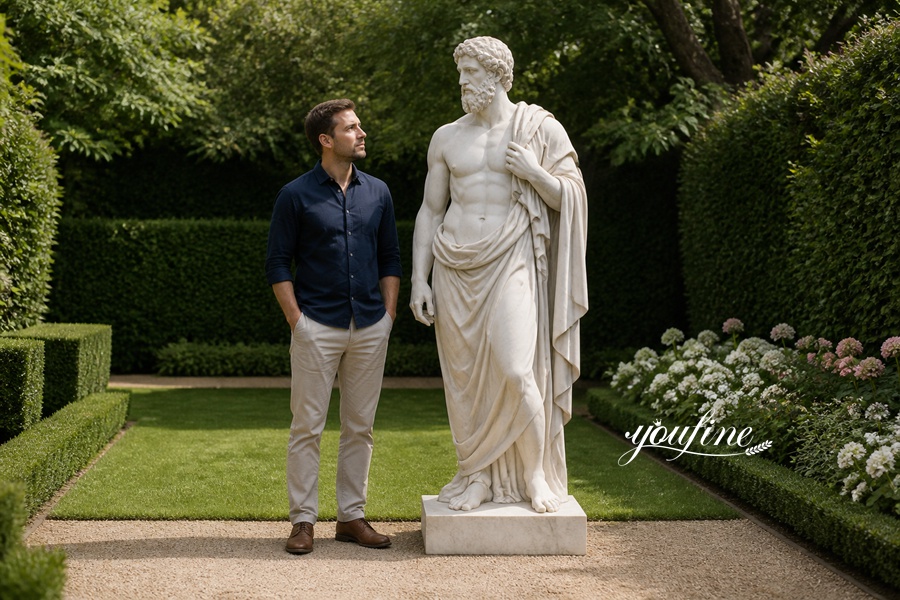
| Viewing Context | Recommended Height | Why |
| Eye level (indoor, close viewing) | 80-120 cm | Full figure visible at conversational distance |
| Below eye level (garden, viewed from above or level) | 120-180 cm | Proportions read correctly from typical garden viewing distances |
| Far below eye level(monumental, viewed from below) | 200-300 cm | Dramatic upward perspective; figure towers over viewer |
| Distant viewing (estate, seen from 20m+) | 300 cm+ | Anything smaller becomes a blur at distance |
Key principle: If people will view the statue from 10 meters away, a 1-meter statue occupies only about 5 degrees of their field of vision — barely noticeable. At 15 meters, a small statue can easily lose visual impact unless its height, width, and silhouette are strong enough to read from that distance.456
Religious Statues (Church & Sacred Spaces)
Religious figures follow a different logic: they need to be visible from the back row while maintaining proportionality with the altar, nave, and surrounding architecture.78
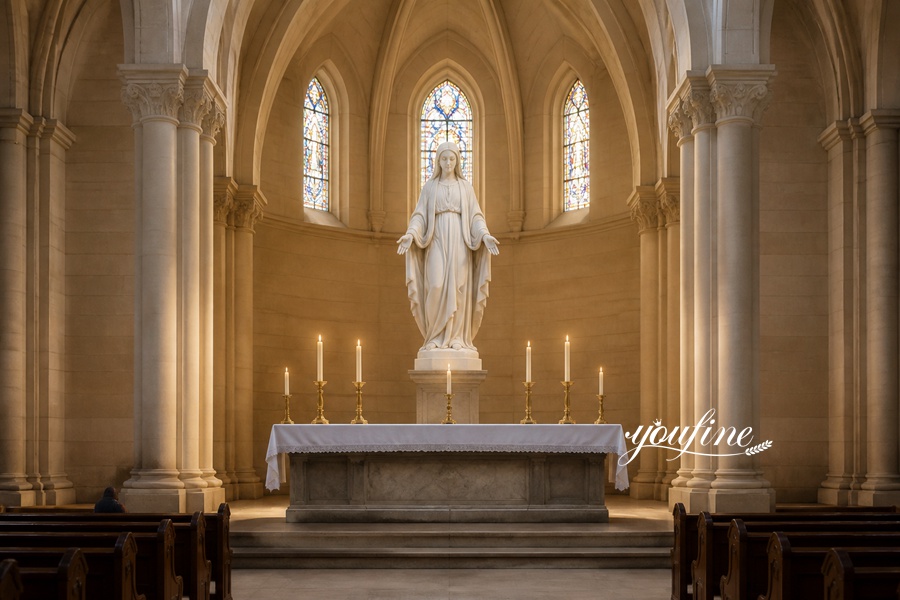
| Church Space | Recommended Height | Notes |
| Side chapel / small niche | 120-160 cm | Visible from 5-10 meters; intimate devotional scale |
| Nave side / side altar | 160-220 cm | Readable from mid-nave; prominent but not dominant |
| Main altar / sanctuary center | 220-300 cm | Must command attention from the back of the church |
| Outdoor shrine / grotto | 200-350 cm | Visible from pathways and parking areas; weather considerations apply |
As a practical workshop rule, we usually recommend that a statue behind the main altar should not exceed about 60-70% of the ceiling height at that point. A 4-meter ceiling calls for a statue no taller than ~280 cm including base. Leave breathing room between the highest point of the statue and the ceiling or arch above it.
Animal Statues & Guardian Figures
Lions, horses, dogs, and wildlife sculptures are often placed at entrances or as landscape anchors. Their sizing differs from human figures.
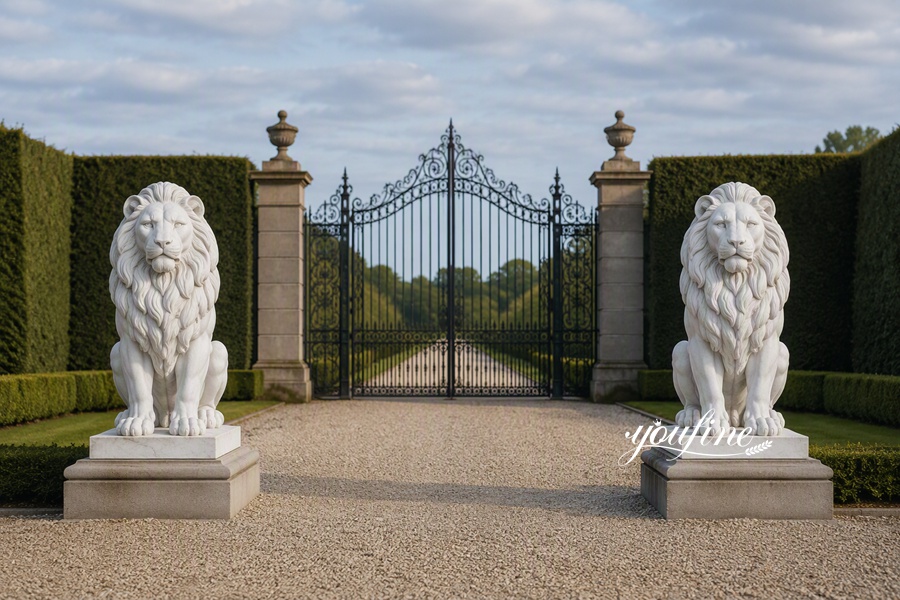
| Placement | Recommended Height | Notes |
| Gatepost / entrance pillar | 60-100 cm each | Pairs flanking an entrance; seen from 3-10 meters |
| Driveway entrance | 100-180 cm each | Must read clearly from a moving vehicle at 20+ meters |
| Garden path / ornamental | 80-140 cm | Viewed from walking distance; details matter |
| Estate entrance (grand) | 180-300 cm each | Monumental guardians; visible from 50+ meters |
Pairing rule: When placing two animals as a pair (e.g., lions flanking a gate), they must be identical in size. Even a 5 cm height difference between two “matching” statues becomes obvious and looks careless. Always confirm that paired pieces are carved from the same measurements.
Multi-Figure Groups
When a sculpture includes two or more human figures interacting, sizing becomes more complex.
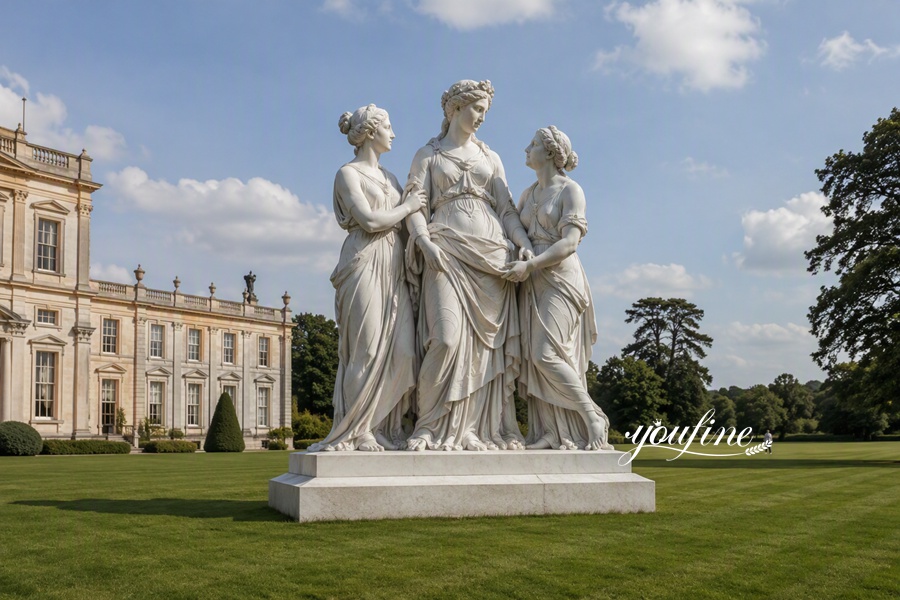
| Composition Type | Recommended Total Height | Notes |
| Intimate duo (e.g., Mary & Child, couple) | 100-180 cm | Figures share a single visual mass; treat as one unit |
| Narrative group (3-5 figures) | 180-350 cm | Needs space to read the interaction from multiple angles |
| Large composition (5+ figures) | 350 cm+ | Usually monumental public or estate pieces |
Group rule: The overall visual mass of a multi-figure group reads as roughly 1.3-1.5x that of a single figure at the same height. A200 cm group sculpture feels significantly larger and heavier than a 200 cm single figure. Plan for more surrounding space, not just more height.
4.The Pedestal: Why It Makes or Breaks the Proportion
A sculpture’s base is not an accessory — it is part of the sculpture. Get the pedestal height wrong, and even a perfect statue looks awkward.
The Pedestal Height Formula
For a freestanding figurative statue on a pedestal:
Pedestal height = 15-20% of (statue height + pedestal height)
Or, more practically:
| Statue Height (without base) | Recommended Pedestal Height | Total Height |
| 60 cm (24 in) | 60-80 cm (24-32 in) | 120-140 cm |
| 100 cm (40 in) | 80-100 cm (32-40 in) | 180-200 cm |
| 150 cm (60 in) | 100-120 cm (40-48 in) | 250-270 cm |
| 200 cm (80 in) | 40-60 cm (16-24 in) | 240-260 cm |
Notice the shift: as statues get larger (150 cm+), the pedestal becomes proportionally shorter. A life-size figure on a 1-meter pedestal would place the head 2.5 meters high — above eye level, which works for monumental pieces but feels disconnected
Bust Pedestals: The Eye-Level Rulearden statues.
For portrait busts, the pedestal should place the subject’s eyes at approximately the viewer’s eye level (150-165 cm from the ground). This creates the sense of meeting the subject face-to-face.91011
| Bust Height (head + shoulders) | Recommended Pedestal Height |
| 40 cm (16 in) | 110-125 cm (44-50 in) |
| 60 cm (24 in) | 90-105 cm (36-42 in) |
| 80 cm (32 in) | 70-85 cm (28-34 in) |
5.How to Test Size Before You Commit
You cannot return a hand-carved marble sculpture. These three methods cost nothing and prevent the most expensive mistake you could make.
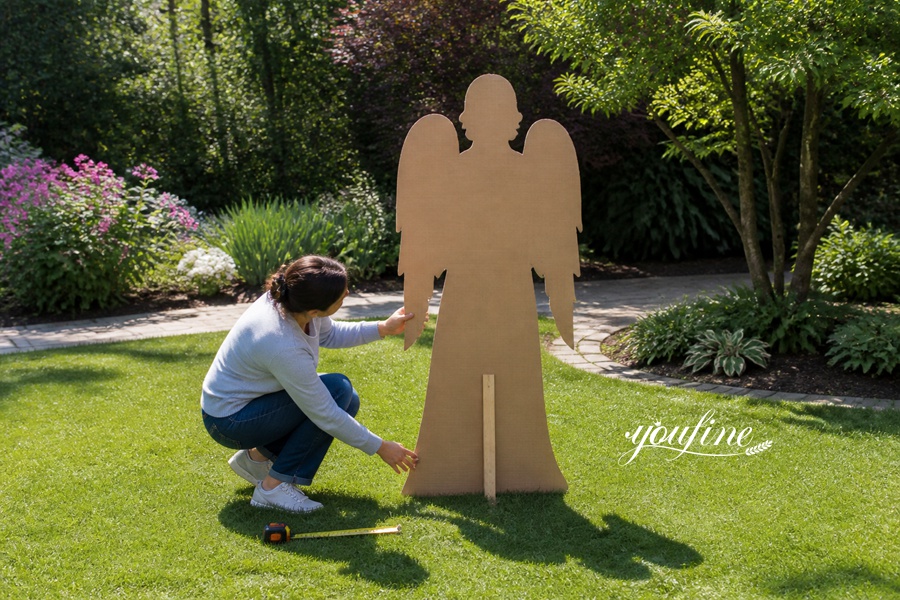
Method 1: The Cardboard Cutout
This is what I tell every client to do, and the ones who listen are always glad they did.
1. Get a large piece of cardboard (or tape several boxes together)
2. Cut it to the exact height and width of the sculpture you are considering12
3. If it is a fountain, cut the pool diameter as a circle on the ground too
4. Place it in the intended spot
5. Look at it from every angle people will actually see it from
6. Leave it there for 2-3 days
7. Photograph it at different times of day (morning light and evening light change how large it appears)
The 2-3 day rule matters. Your first impression on day one is often “that looks big.” By day three, you have adjusted — and the cardboard cutout tells you the honest truth.
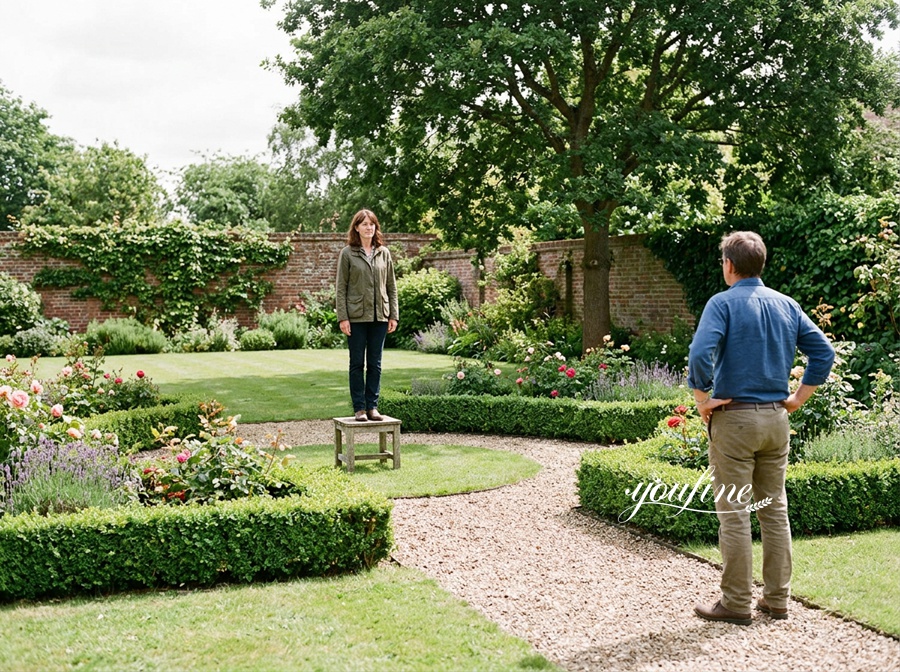
Method 2: The Human Stand-In
For statues, have someone stand in the intended spot at the sculpture’s height (use a stool or ladder if needed). Stand at your typical viewing distance and ask yourself: does this person command the space? Or do they disappear?
This is especially useful for garden pieces where the viewing distance is long.
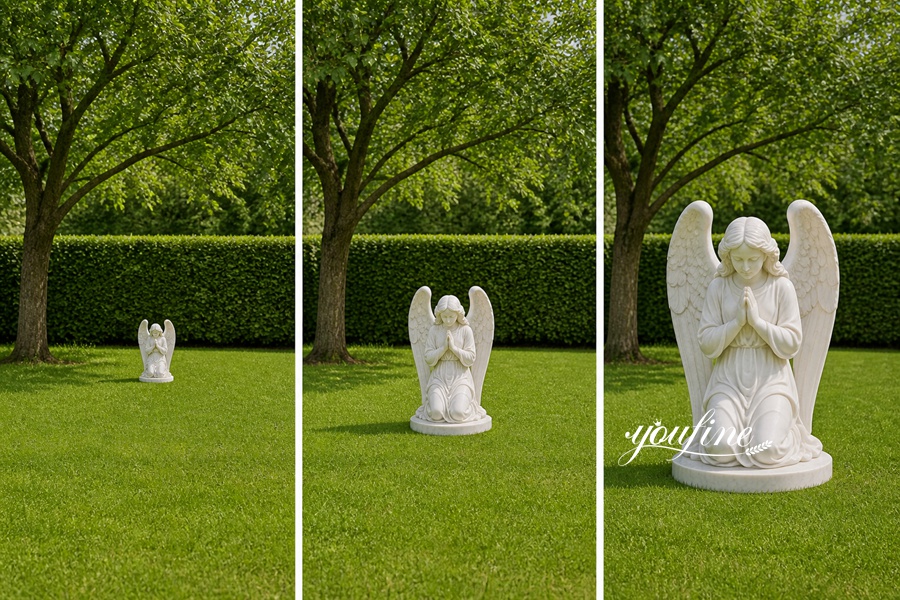
Method 3: The Photo Test
Stand where people will first see the sculpture. Take a photo of the empty space. Now imagine — or sketch — the sculpture at 10%, 20%, and 30% of the frame height. Which proportion feels right?
As a practical rule of thumb, we often find that a sculpture filling roughly 15-25% of the photo frame height reads as a clear focal point. Under 10%, it tends to become a background detail; over 30%, it may dominate the view.13
6.Common Sizing Mistakes
I have seen every one of these happen. Learn from them.
Mistake 1: Buying for the Room, Not the Viewing Distance
A client bought a 120 cm marble angel for their church nave. In the showroom, it looked magnificent. In the church, viewed from the back pew 25 meters away, it looked like a small white speck. The angel was the right size for the room’s floor area — but the wrong size for its viewing distance.
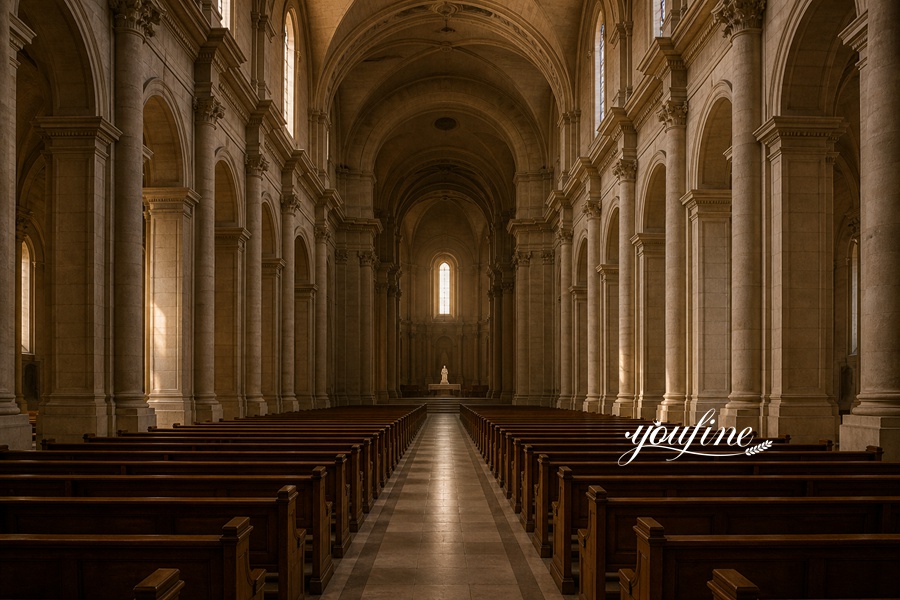
Lesson: Size for the longest viewing distance, not the floor area.141516
Mistake 2: Ignoring What Surrounds the Sculpture
A client placed a 150 cm Roman figure in front of a 8-meter hedge. From the terrace, the dark green hedge swallowed the white marble. The statue needed to be at least 220 cm to read against such a tall, dense backdrop.
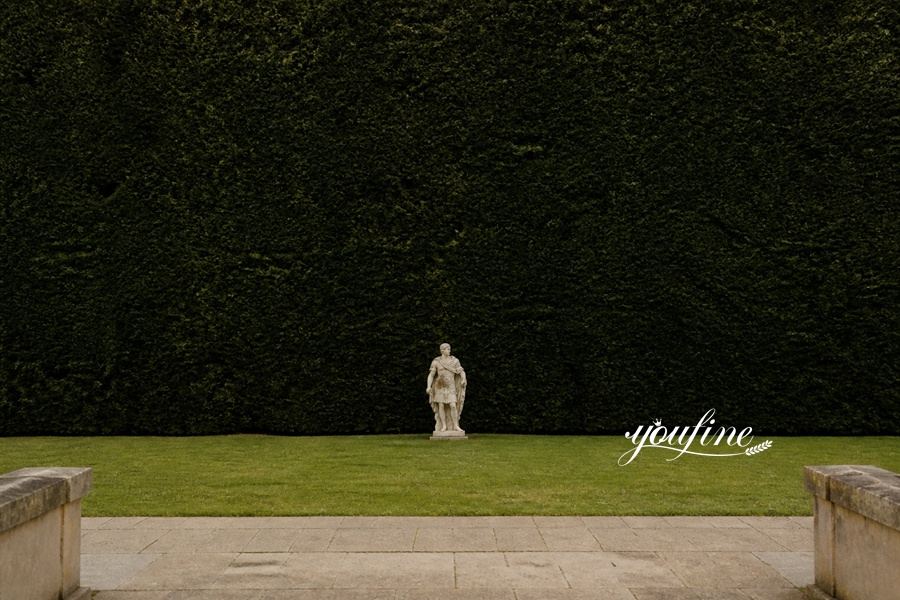
Lesson: Large background elements such as hedges, trees, walls, and buildings create powerful scale references, which can make a sculpture appear smaller unless its height and mass are adjusted accordingly.171819
Mistake 3: Forgetting the Base Counts
A client commissioned a 180 cm statue for a garden corner, then placed it on a 40 cm pedestal, raising the total to 220 cm. The problem? A low tree branch hung at 230 cm directly above. The statue’s head nearly touched the leaves — ruining the silhouette.
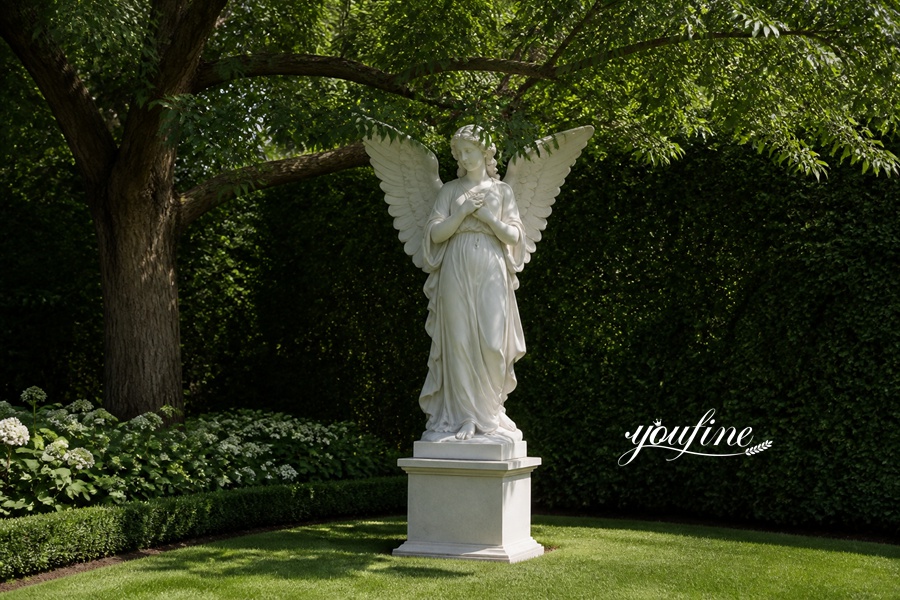
Lesson: Always calculate total height: statue + pedestal. And always look up.
Mistake 4: Pairing Sculptures of Mismatched Scale
A client placed a 200 cm lion statue at the entrance and a 120 cm lion at the garden path 15 meters away. From the driveway, the path lion looked like a small dog next to the entrance lion. The size difference made both look wrong.
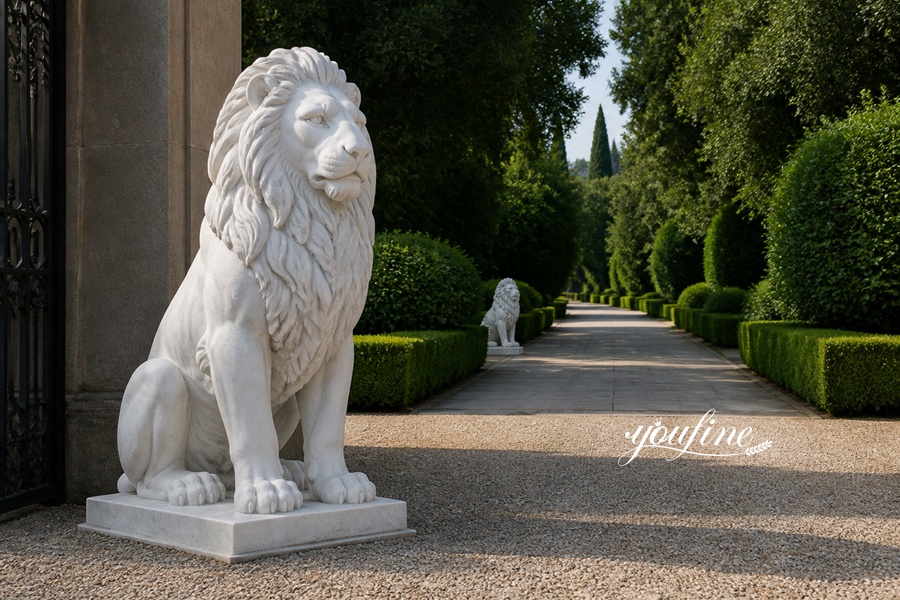
Lesson: Sculptures visible from the same vantage point need consistent scale — or deliberately dramatic contrast (e.g., 250 cm entrance piece, 80 cm courtyard piece seen from a completely different angle).
Mistake 5: Choosing Height Without Considering Width
A client ordered a 180 cm standing angel for a narrow hallway niche. The height was fine — but the wingspan extended 120 cm wide in a space only 90 cm deep. The sculpture technically fit the height but physically could not fit through the doorway to reach its spot.
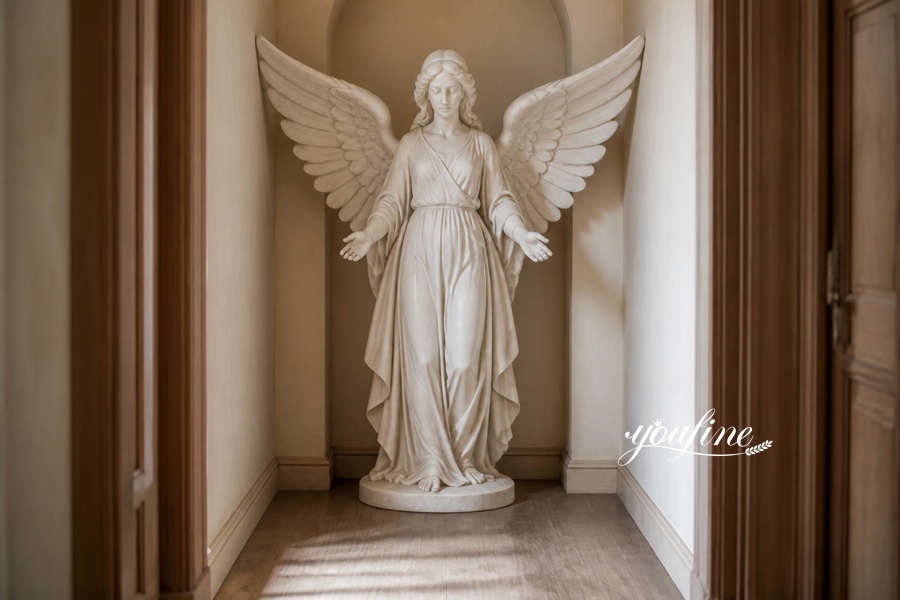
Lesson: Height gets the attention, but width determines whether the sculpture actually fits. Always check all three dimensions: height, width, and depth.20
7.Quick Reference: Size by Sculpture Type at a Glance
| Sculpture Type | Small Space | Medium Space | Large Space |
| Portrait Bust | 25-50 cm | 50-70 cm | 70-100 cm |
| Single Figure Statue | 80-120 cm | 120-200 cm | 200-300 cm |
| Religious Statue (Church) | 120-160 cm (chapel) | 160-220 cm (nave side) | 220-300 cm (main altar) |
| Animal / Guardian Figure | 60-100 cm (gatepost) | 100-180 cm (driveway) | 180-300 cm (estate entrance) |
| Multi-Figure Group | 100-150 cm | 150-250 cm | 250-400 cm |
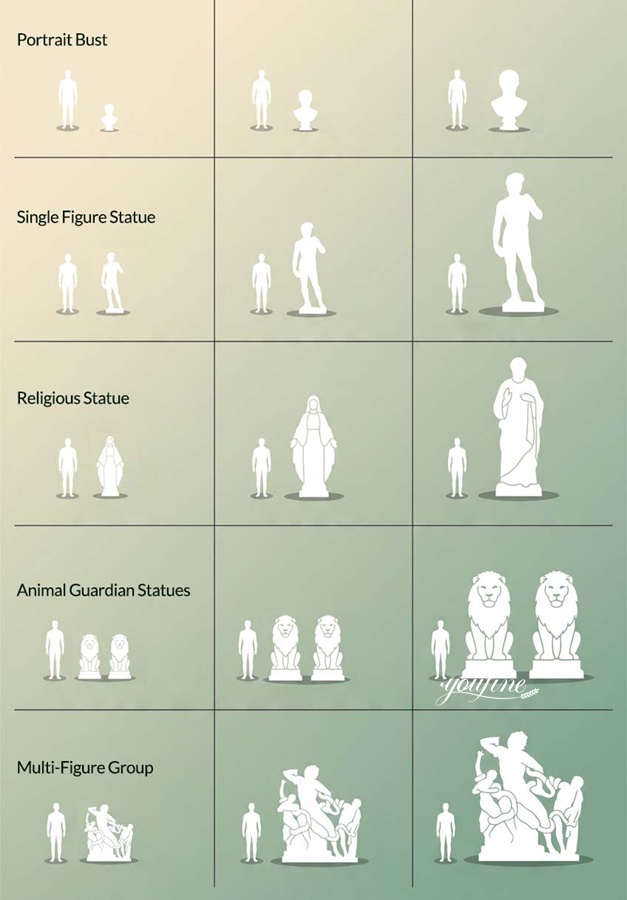
All heights exclude pedestal. Add pedestal height separately (see Pedestal section above).
8.When in Doubt: The One-Size-Up Rule
I will say it again because it is the advice I have given more than any other:
If you are deciding between two sizes, and both fit your space and budget — choose the larger one.
I have consoled clients who wished they had gone bigger. I have helped clients relocate sculptures that overwhelmed their space. But the first phone call happens five times more often than the second.
Need help deciding on a size for a specific piece or space? Send us a photo of your location with rough dimensions — our consultants will recommend the ideal proportions at no cost. Contact us here.
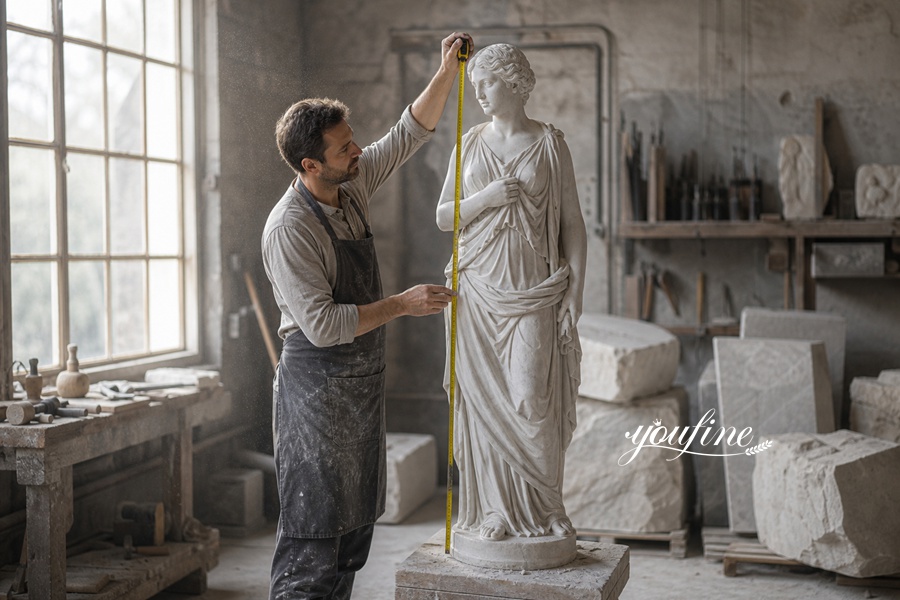
Vincent is a marble sculpture consultant with over 15 years of experience. He has helped thousands of clients in 50+ countries choose the right sculpture for their homes, gardens, churches, and estates. states.
- Wikipedia — Subjective constancy or perceptual constancy… ↩︎
- Britannica — Perception… ↩︎
- OpenStax Psychology 2e — Sensation and Perception… ↩︎
- Wikipedia — Visual angle… ↩︎
- Georgia State University HyperPhysics — Angular Size… ↩︎
- NASA — Angular Size and Similar Triangles... ↩︎
- Catholic Church Architecture and Liturgy — USCCB Built of Living Stones… ↩︎
- Vatican — General Instruction of the Roman Missal… ↩︎
- CDC / NIOSH — Anthropometry and Ergonomics… ↩︎
- University of Missouri Extension — Anthropometric Data… ↩︎
- ADA Standards for Accessible Design… ↩︎
- Whole Building Design Guide — Mock-Ups… ↩︎
- Tate — Composition… ↩︎
- Wikipedia — Visual angle… ↩︎
- Public Art Archive — Public Art and Site Context… ↩︎
- Americans for the Arts — Public Art Resource Center… ↩︎
- University of Florida IFAS Extension — Principles of Landscape Design… ↩︎
- Penn State Extension — Landscape Design Principles… ↩︎
- NC State Extension — Landscape Design… ↩︎
- Canadian Conservation Institute — Care of Objects and Collections… ↩︎