
Choosing a marble fountain is not only about finding a design you like. The right fountain should fit the scale of the garden, the architecture around it, the way people will view it, and the water effect you want to create. A fountain that looks impressive in a catalog can feel too small in a large estate garden or too dominant in a compact courtyard.
At YouFine, we usually look at the site first and the fountain second. Garden dimensions, viewing distance, surrounding buildings, access for installation, and the desired visual effect all influence the final recommendation. This guide explains the main decisions to make and shows how different fountain styles can suit different spaces.
1. Start With the Size of Your Garden
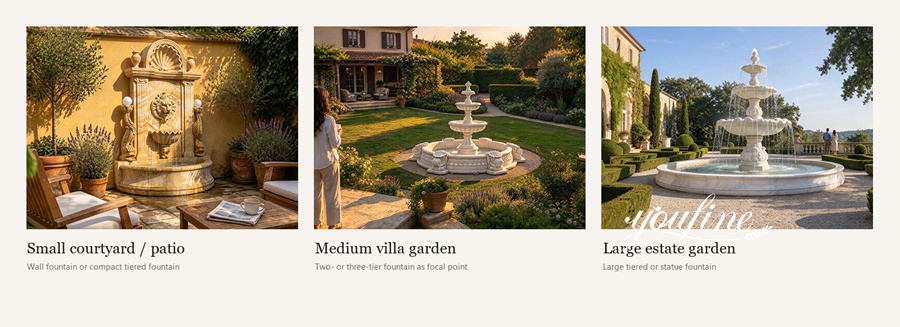
Garden size is the best place to start because fountain scale determines how the whole space feels. A small fountain can disappear in a wide lawn, while an oversized multi-tier fountain can make a narrow courtyard feel crowded.
For a compact courtyard or patio, a wall fountain or a small one-or two-tier fountain usually gives enough visual interest without taking over the space. In a medium villa garden, a two- or three-tier fountain can become a clear focal point while still leaving room for planting, seating, and circulation. Large estates and hotel landscapes can support wider basins, taller fountain structures, and sculptural compositions with figures or multiple tiers.
| Garden Scale | Good Starting Point | Typical Fountain Direction |
| Small courtyard / patio | Compact footprint | Wall fountain or small tiered fountain |
| Medium villa garden | Balanced focal point | Two- or three-tier fountain |
| Large estate garden | Strong visual presence | Large tiered or statue fountain |
| Hotel / landscape project | Site-specific scale | Large custom fountain or sculptural water feature |
2. Match the Fountain Style to the Architecture
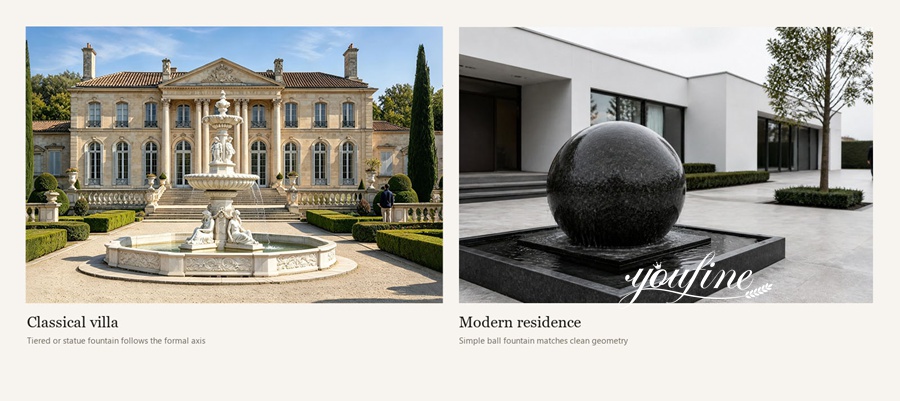
A fountain works best when it feels connected to the architecture rather than placed in the garden as a separate object. Look at the building style, facade color, paving, columns, balustrades, and overall landscape geometry before choosing the fountain design.Classical villas, French gardens, and traditional estates usually work well with tiered fountains, carved bowls, figure fountains, and ornamental details. For modern villas and contemporary hotel entrances, simpler geometry, cleaner profiles, or ball fountains can create a more natural visual connection. In a château-style garden or formal estate, a statue fountain can provide the strongest artistic centerpiece.
3. Choose the Right Fountain Type
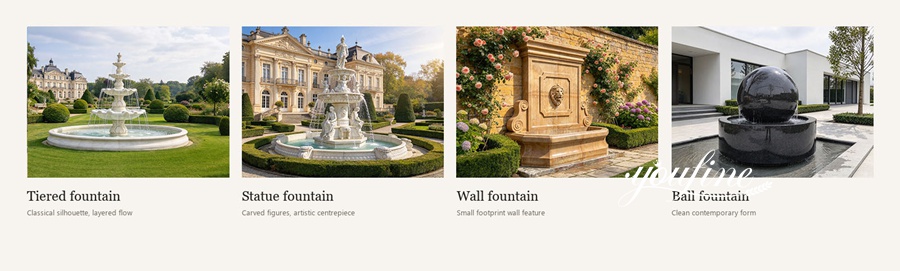
Once the scale and architectural direction are clear, the next decision is the fountain type. Four styles
cover many garden projects: tiered fountains, statue fountains, wall fountains, and ball fountains.
| Fountain Type | Best For | Main Character |
| Tiered Fountain | Gardens, villas, estates | Classical silhouette and layered water flow |
| Statue Fountain | Formal gardens, hotels, large estates | Artistic centerpiece with carved figures |
| Wall Fountain | Courtyards, patios, narrow spaces | Decorative water feature with a smaller footprint |
| Ball Fountain | Modern entrances and landscapes | Clean contemporary form and flowing water |
If you are unsure which direction is right, start by asking what the fountain should do visually. Atiered fountain often creates movement and sound. A statue fountain adds a stronger artistic story. A wall fountain can decorate a limited space without using a large basin, while a ball fountain creates a cleaner modern focal point.
4. Consider Proportion and Viewing Distance
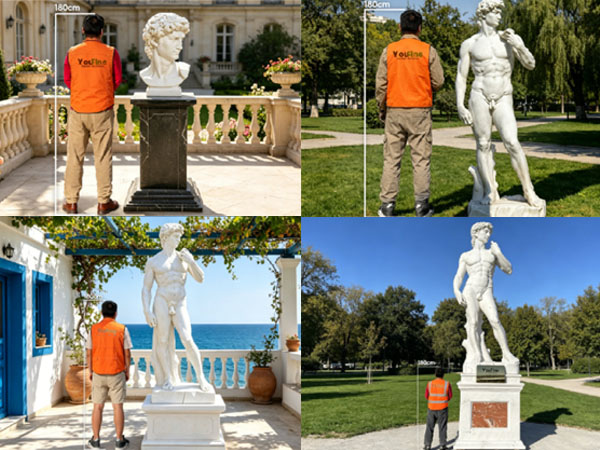
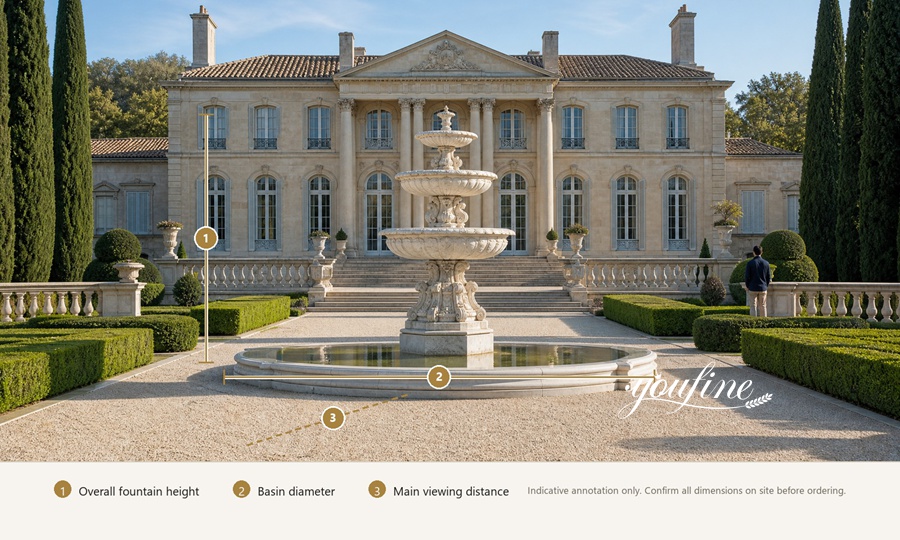
The same fountain can feel completely different depending on how far away it is viewed. In a small courtyard, visitors may stand only a few meters from the carving, so details, bowl profiles, surface finish, and figure quality matter greatly. In a large estate, the silhouette, total height, basin diameter, and water movement become more important because the fountain may be viewed from a driveway, terrace, or building entrance.
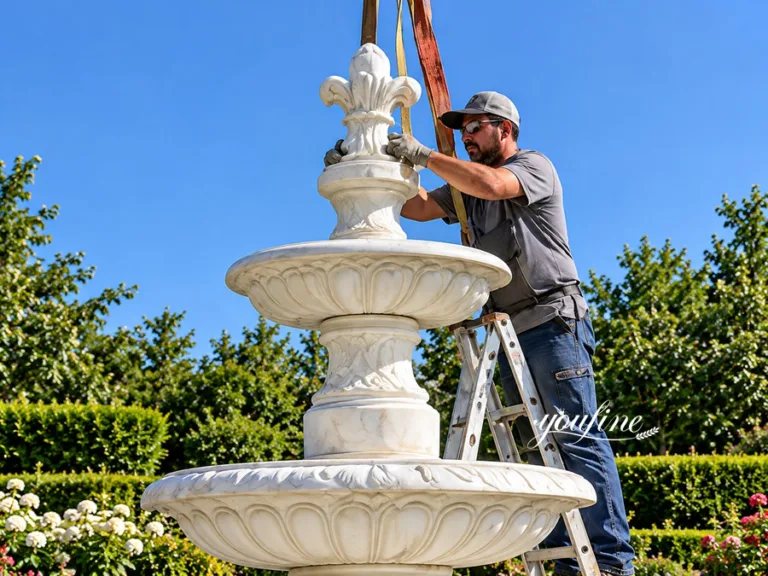
A useful rule is to evaluate the fountain together with the surrounding architecture. The basin should not visually collide with nearby paths, stairs, or planting beds, and the upper structure should be large enough to remain visible from the main viewing points. For custom projects, fountain height and basin diameter can be adjusted together rather than simply enlarging one part of an existing design.
5. Choose a Marble Color That Belongs in the Space
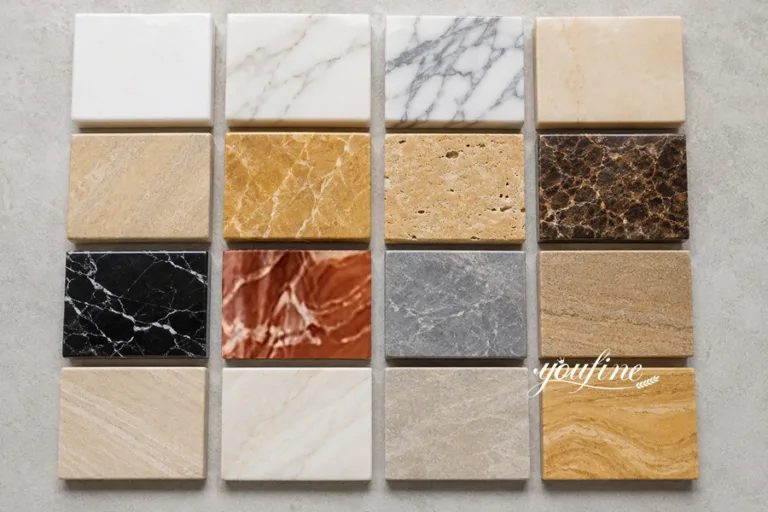
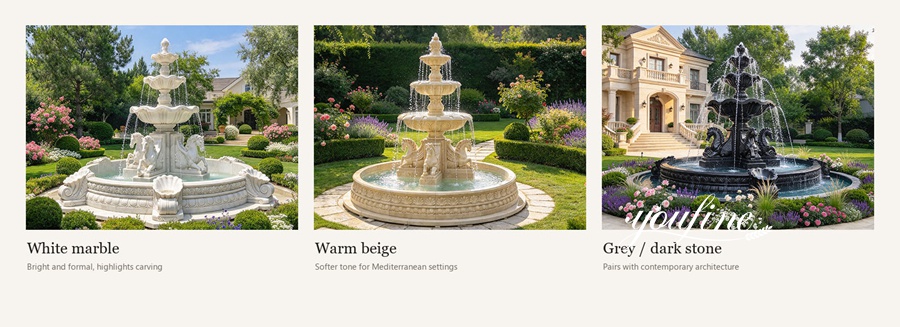
Stone color changes the character of a fountain. White marble gives a bright, formal appearance and highlights carved figures and classical details. Beige stone creates a warmer look that often suits Mediterranean-style villas, courtyards, and older architecture. Grey or darker stone can work well with contemporary buildings, especially when the fountain design itself is simple.
Do not choose color from a close-up stone sample alone. Consider the paving, walls, facade, plants, sunlight, and water. Wet stone often appears darker than dry stone, so the finished fountain may look different once it is operating. Natural stone also varies in veins and color, which is part of its character.
6. Decide What Kind of Water Effect You Want
Clients often focus on the carving first, but the water effect is equally important. The sound, splash range, water pressure, and movement all influence how the fountain feels in daily use.
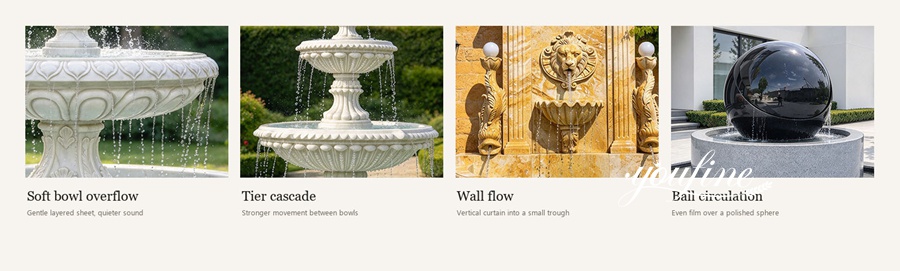
Broad tiered bowls can create a softer layered overflow and a relaxing sound. Narrow outlets or jets can create a stronger visual effect but may produce more splash. Wall fountains usually create a quieter vertical flow, while ball fountains rely on water moving evenly over the sphere. For seating areas or entrances, a gentler water effect may be more comfortable than a high-pressure display.
The pump, pipe layout, outlet size, and height difference between tiers should be planned together. For custom fountains, water testing before shipment can help check the basic flow pattern and identify adjustments before installation.
Popular Fountain Designs for Different Garden Settings
Instead of choosing a fountain only because it is a best seller, use popular designs as proven starting points and then adapt them to the site. Below are practical ways to present your best-selling models inside the article.
For a Classical Villa Garden
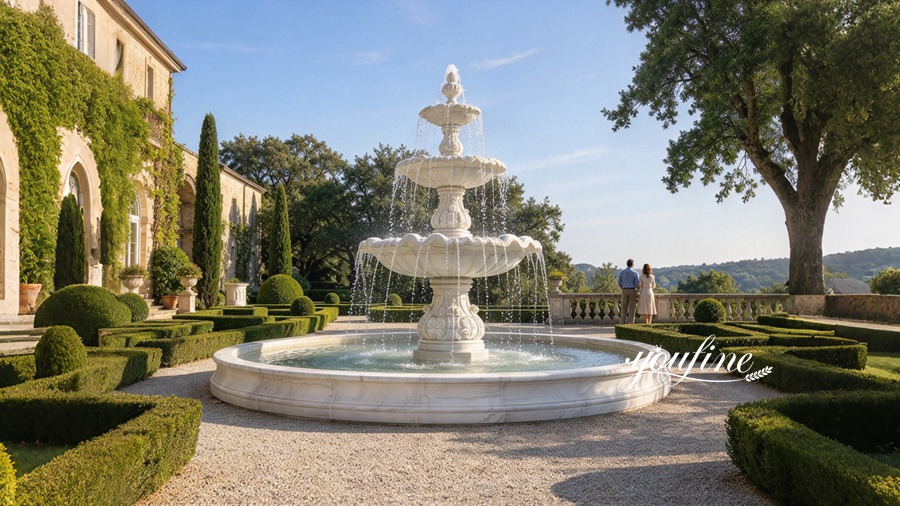
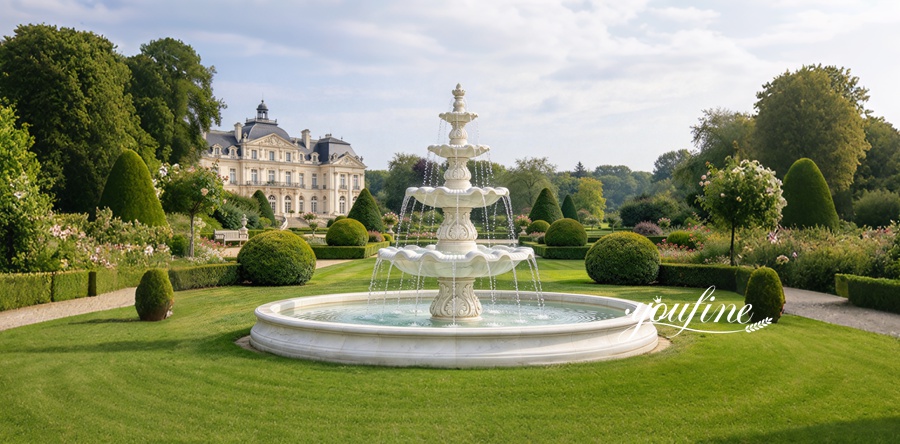
A tier white marble fountain is a reliable choice for symmetrical lawns, villa courtyards, and formal garden axes. The layered bowls create height without requiring carved figures, so the design remains elegant and relatively easy to coordinate with surrounding architecture.
For a Large Estate or Formal Garden
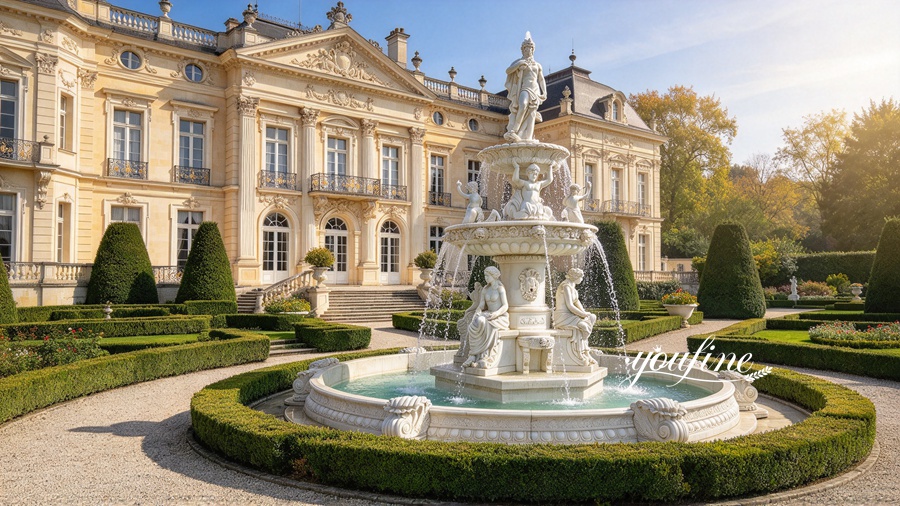
A statue fountain works well when the garden needs a stronger artistic centerpiece. Designs with classical figures, angels, horses, or mythological subjects can be scaled to suit large lawns, circular drives, and estate entrances.
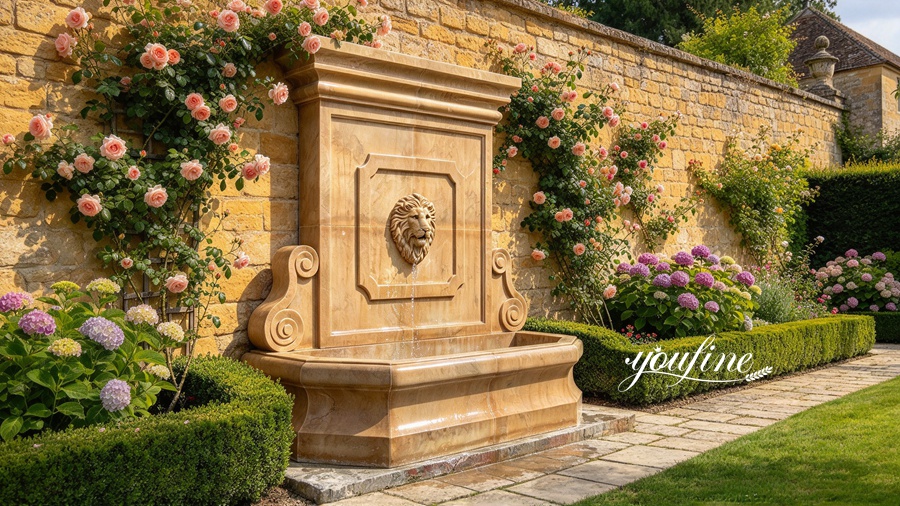
For a Courtyard or Limited Space
A marble wall fountain can introduce moving water without requiring a large freestanding basin. It is especially useful beside garden walls, patios, enclosed courtyards, and villa entrances.
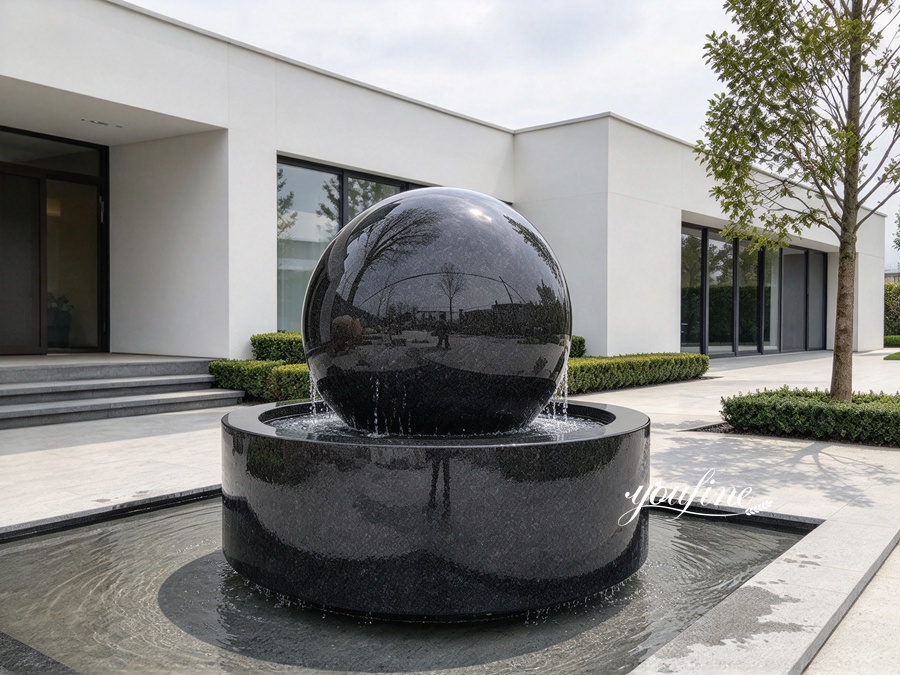
For a Modern Landscape
A polished stone ball fountain creates a simple focal point with continuous flowing water. It can suit modern villas, hotel entrances, and contemporary landscape designs where ornate carving would feel too traditional.
Common Mistakes to Avoid When Choosing a Garden Fountain
Choosing by Appearance Alone
A beautiful fountain can still be wrong for the site if its scale, water effect, or installation requirements do not match the garden.
Selecting a Fountain That Is Too Small
This is common in large lawns and estate gardens. A fountain that looks substantial in a close-up product image may feel visually weak when placed far from the house.
Ignoring Splash Range
Strong jets and high drops can send water beyond the basin. Consider nearby walkways, seating, doors, and walls.
Forgetting Pump Access
The pump and valves will eventually need inspection or cleaning. Maintenance access should be planned before installation.
Choosing Stone Color Without Considering the Architecture
The fountain should connect visually with paving, walls, facade colors, and the overall landscape rather than being chosen in isolation.
What Should You Prepare Before Ordering a Marble Fountain?
You do not need a complete technical drawing before contacting a fountain manufacturer. A few basic details are usually enough to start a useful discussion:
- Site photos or a simple site plan
- Approximate installation dimensions
- Preferred fountain style or reference images
- Desired overall size or basin diameter
- Preferred marble color
- Water effect preference
- Project location
- Target timeline and, if available, budget range
With this information, we can compare suitable fountain types, recommend a more realistic scale, and identify installation requirements before production begins.
The Best Fountain Is the One That Fits the Site
There is no single marble fountain that is perfect for every garden. The best choice is the design that fits the scale of the space, supports the architectural style, creates the right water effect, and can be installed and maintained properly.
If you are comparing several fountain designs, start with the site rather than the catalog. Measure the available space, identify the main viewing direction, decide how strong you want the water effect to be, and choose a stone color that works with the surrounding architecture. From there, the fountain design can be refined around the project.
Planning a Marble Fountain for Your Garden?
Send us your site photos, approximate dimensions, or preferred fountain designs. Our team can help compare suitable styles, sizes, stone options, and basic installation requirements.